Ask Allison

The place to post questions and find answers on all of your too-afraid-to-ask concerns, hesitancies and worries about breaking into the publishing field. Have a question? Email me or post in the comment box.

Friday, May 23, 2008

This Really Is the Time Of My Life

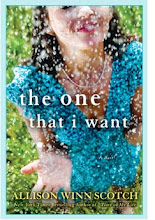
So has anyone been following American Idol? (Why, oh why am I publicly admitting to this???) I got sucked in this year thanks to the strike (nothing else to watch), despite not having watched in three or four seasons, and beyond the fact that I am slightly obsessed with David Cook, I am so tickled that the coronation song (chock full of those requisite "rainbows," etc) is called Time of My Life.

I was listening to it on virtual repeat on iTunes yesterday when I had what might have been the best professional day of my life: I got news from so many fronts that my head was nearly literally spinning - I still can't wrap my brain around everything, and I can't reveal all of the news (I know, I'm a tease - next week, for sure), but one thing that I can announce is that Random House sold the rights to Time of My Life in Australia, Spain and Germany, and beyond being awesome for a variety of reasons, these deals ensured that even before the book hits stores, I've sold out my advance. Which is so big, I can't even explain it.

But let me backtrack and try.

When you get an offer for your book, what you're getting is a lump sum of money upfront that is yours and yours to keep. You then spend the rest of your time trying to earn that money back for the publisher, and until you do (and there's a statistic out there which says that something like 4 out of 5 books - or a really high number like that - never will), you're not going to see another dime. Sure, royalties sound great, but for many writers, they're theoretical.

I'm not sure why the publishing industry is set up this way. Basically, when you're offered your advance, the sales and marketing team has done some research quantifying how many books they expect you to sell, how valued your book will be overseas, etc, but really, it's a crap shoot. This is why huge advances can be daunting: there is a very good risk that you'll never earn it back, but small advances can bring a different type of death knell: they mean tiny print runs and no exposure. I know that HarperCollins, for example, is exploring a different way of paying authors: no advance, higher royalties, and of course, a lot of authors aren't thrilled about this because it only benefits us (at least in the short-term) to get more money than we might have earned on royalties alone. But the publishing industry loses a lot of money, and really, objectively, it's easy to see why.

But I've digressed. My point here is that these foreign sales were so juicy that I've already earned out my advance. And I didn't realize it, but this is the biggest relief I could ever dream of. The pressure you feel once your book is out there in the world is enormous. But it's ever-present, so it's almost like you're unaware of it until you realize that there could be an absence of this pressure, that, in fact, I could sell nary a copy of this book and my publisher would still make money on it. And wow, knowing that? What a different experience this time around is going to be. I want to enjoy it, savor it now that there are no financial expectations to live up to. You forget about that when you're going through this process - really, you think the goal is just to sell your book to a publisher and have people read it, but that can't just be the goal. The goal, like it or not, has to be to be profitable. Or else your next advance will falter or worse, you won't get the chance to be published again.

Anyway, what can I say? I am flipping out. With relief. Relief from tension that I didn't even realize I felt. And I plan to continue to listen to David Cook's coronation song, cheesiness and all, the entire weekend, because really, this is the time of my life.

(And yes, more big news hopefully next week!)

Wednesday, May 21, 2008

GCC Presents: Maggie Marr and Secrets of The Hollywood Girls Club

Today's GCC pick is The Secrets of The Hollywood Girls Club, which, as a closet US Weekly reader, is so up my alley! Seriously, this is the perfect beach book: well-written (just ask Booklist or Publishers Weekly), juicy, gossip-packed, faced-paced...need I say more? Probably not, so I'll just let Maggie Marr, the author, speak on the book's behalf. But before she does, here's a little more scoop on the book.

Maggie Marr’s first novel, Hollywood Girls Club, introduced us to four fabulous Hollywood heavyweights and best friends - Jessica, Celeste, Lydia, and Mary Anne. Now, in SECRETS OF THE HOLLYWOOD GIRLS CLUB, these high-powered women take on a new challenge-the Hollywood rumor mill. Those who fell in love with Marr’s witty writing and fast-paced plot will be eager to dive into this sequel which delves even deeper into the glamorous, treacherous Hollywood lifestyle.

Although she is one of the hottest actresses in Hollywood, Celeste is wondering how long she can maintain her success. With age creeping up and body parts sagging down, how will she maintain her “It Girl” status? Mary Anne, recently back in LA after a breakup in London, is helping to write Lydia’s latest movie called The Sexual Being. Of course, her bigger challenge will be avoiding her old flame, Holden Humphrey, who happens to be starring in it.

Lydia has recently started receiving mysterious notes that seem to be hinting toward a secret she’s kept buried for years. Not only that, Jessica, uber-agent to the stars and recent new mom, has just told Lydia that somebody has gotten their hands on a very compromising DVD that Celeste made with her ex-husband—how will she protect her friend (and the top earner for her production company)? Meanwhile, publicist Kiki Dee has gotten her hands on some of these secrets and is willing to do almost anything to keep her spot at the top of the Hollywood PR machine. Will the Hollywood Girls Club discover the source of the threats? Will Celeste give in to the Hollywood machine and undergo plastic surgery? Will Mary Anne and Holden find happiness with each other? And with so much going on, will Lydia’s latest movie ever be completed?

1) What’s the backstory behind your book?
Prior to becoming a full time writer, I was a motion picture agent for ICM. I worked full time repping writers and directors. So Hollywood is my home. I started hearing a character voice in my head and late at night when I couldn’t sleep or on the weekends, I would write down the story I was told. This story became the first draft of my first book Hollywood Girls Club. Secrets of The Hollywood Girls Club is the second book in the series and a continuation of the lives of these four fabulous women who live and work in Hollywood.

2) It seems that a lot of readers confuse fiction with real life, assuming that a novel must be an autobiography of the author as well. How many elements of your real life are reflected in your book?
I think my unconscious took a huge amount of my day to day life in entertainment and fictionalized it. As I write and then read the book, I see so many similarities to things I’ve seen, stories I’ve heard and people I know. But it wasn’t conscious.

3) A lot of my blog readers are aspiring or new authors. How did you land your first book deal?
As I said, I’d been writing for fun, in my spare time. It was my husband who convinced me to give four chapters to my friend and colleague (and now agent) at ICM. I gave her four chapters without my name on them, guessing she’d pass and then I could go on about my life repping my screenplay writer and directing clients. But instead she loved it. I finished the manuscript and when she took it out, there were two houses that wanted the book…so I ended up going with Crown. And suddenly, I was a writer.

4) I have a serious procrastination problem when it comes to tackling my fiction. What’s your routine? How do you dive it? Do you have any rituals or necessary to-dos before or while you write?
Let’s see. I love the mornings. I love to be at my computer by 7:30 or 8 am to get started. I have a goal of one chapter a day which for me is about 10 pages. Some days I make it, other days I don’t. But when I’m working on the first draft, whizzing along, I try for ten pages. I work in the morning until noonish and then I take a break and have lunch with my girls. I put them down for nap and write another two hours, from two to four. Usually I’m pretty shot by four pm. I might read or edit in the evening once the girls are in bed, but I don’t usually get much writing accomplished.

5) Clearly, your book will be optioned for a multi-million dollar film deal! Who would you cast as the leads, if you were given creative control?
Celeste could be played by Jessica Biehl…or an older version of Jessica Biehl
Lydia hmm…Jada Pinkett Smith
Jessica would be played by Carla Gugino
Mary Anne Meyers would be played by Bridget Moynihan


Labels:

Monday, May 19, 2008

Complete and Total Pimpage of Laura Dave

I am so super-excited to be hosting a Q/A today with bestselling author Laura Dave who penned London is the Best City in America and whose follow-up novel, The Divorce Party, is hitting stores today! Full disclosure: Laura is one of my favorite people in the world, outside my immediate family, but when we met, I was only a fan of her writing, not her person. But I can happily report that they are both of excellent quality.

Here's what happened: a few years ago, I read London, then read Laura's bio (complete with blond, beautiful pic) and noticed that we went to the same college. I was slightly intimidated by her pic and her writing acumen, but I sent her a note anyway, and she immediately wrote me back and said, "Hey, we should meet up." So we went out for coffee. Turns out that not only did we go to the same university, we were in the same sorority (I graduated just before she arrived - I'm old), and had a slew of things and friends in common. From there, she promptly endeared herself to me with her support, her kindness and her intelligence, and now, as I said, I am among her biggest fans.

Case in point - and this really demonstrates her level of generosity, both as a friend and a writer: when she heard about the premise of Time of My Life, she immediately emailed me and asked me for an early copy. I told her it was littered with typos and snafus, but she didn't care - she'd been dying to write or read a "what if" novel, so she wanted it and wanted it now! She printed up the 300 pages herself, read it on a plane ride, and emailed me to gush. (That's not the best part! Ha!) When we met up soon thereafter and she heard that my epigraph had fallen through (lyric rights didn't pan out), she offered me - insisted, really - that I use her favorite quote, one that she'd used in her very first (doomed - see below) novel. I hemmed and hedged because I didn't want to use a quote that she said, "changed her life!," but she is so generous and wonderful that she passed it over to me without a second thought, and now, there it is, on the first page of my book. And the book is the better for. So for that, I have Laura to thank.

And that story pretty much sums up the awesomeness that is Laura Dave. So please, rush out and support this fabulous author and person by picking up your own copy of The Divorce Party. And if you're in NYC, join her for her first reading tonight at the Barnes and Noble at Lincoln Center at 7:30! I'll be there with bells on.

And now, with no further introduction, Laura stops by to answer some of my questions:
1
) You have one of the WORST writing-disaster stories I've ever heard - losing the first 200 pages of your first novel for good. Can you spill what happened and how you found the stomach to start over?
Spill is an apt word, sadly. I ordered a tall glass of ice water at a local coffee shop---and dropped the water right onto the keyboard, destroying my motherboard. For a while it looked like everything was lost—including my 200 page novel-in-progress. I had just moved back to New York, post graduate school, and was devastated. But, during that time, I went to the beach to watch fireworks with friends. I thought: the book is actually supposed to start here--with a brother and sister watching fireworks together. I began again. The first three pages of "London..." are the only carry-over from that first novel.

2) Before I knew you, I read your book and was so impressed by how precocious I thought your writing was. Can you tell us a bit more about your path to publication? Did you always set out to be a novelist?
I like being called precocious—thanks! Though, now, I am having a bad memory of my 1st grade teacher calling me precocious, and she wasn't trying to be nice, like you...Let's see. My path to publication was both very long and, at the same time, relatively easy. I always wanted to write, and was writing in some capacity since I was a very little girl. I majored in English at The University of Pennsylvania, where I wrote MANY bad short stories. Then, after college, I began following writing fellowships around the country: I lived in several small towns in my early twenties. I wrote and taught writing, and eventually went to grad school at the University of Virginia, where I wrote my ill-fated first book. Then I wrote "London..." A month after I finished, I went to a writers conference in Tennessee. I met my lovely agent there, and she sent out the book. Less than a week after, we had an offer.

3) I know that you have your MFA, and we've discussed on this blog whether or not getting an MFA is critical to furthering your writing career. Can you chime in on the debate?
It is definitely not critical. What is critical, I believe, is doing something to prove to yourself that you take your writing seriously. The more that you do that—the more that you make your writing a habitual part of your life—the better chance that you have of keeping at it. For some people, that commitment involves graduate school, for others it is getting up at 5 AM two days a week while your family sleeps. The key is finding a writing habit that works for you, and sticking to it.

4) This is your second time around…how is it different from your debut experience?
I am much more zen this time around. With a first book, the unknown is so overwhelming: no one warns you about that! While it is supposed to be so exciting, you are also at the whim of every single thing (good and bad) that happens over the course of publication. Or, at least, that was how I felt. This time around, I am rolling with it more, and enjoying it. I am most excited to head out on tour and see friends and readers around the country. That is the greatest.

5) How did you come up with the idea for The Divorce Party?
"The Divorce Party" started with a conversation I had with a friend about the hurricane of 1938, which ravaged Montauk, New York. Only a few houses survived. I began wondering about those houses—and what would be happening there today. That got me thinking about the parallel between physically building a home with someone and building a life with them. The novel focuses on two women: Maggie Mackenzie, and her future mother-in-law, Gwyn, who find themselves meeting for the first time the weekend that Gwyn and her husband announce they are divorcing after 35 years of marriage. Not the ideal time to meet your future in-laws, right? But it ends up being an exercise for both women in asking the question: when and how do you fight for your family?

6) I know that you researched a lot for the book, interviewing dozens of newly divorced women and such – did this change where you expected the book to go? How influenced were you by your findings?
Research is always crucial for me. I feel like if you are writing about a dentist, let's say, and you know two things about a dentist, you feel compelled to include both factoids. But if you know a hundred things, you only include what informs the novel—So with "The Divorce Party," I ended up doing a ton of research on the hurricane of 1938 (even though it only takes up 10 pages of the book), just to make sure that I knew far too much about the history infusing the book. In a similar way, I have two narrators: a commitment-shy 30 year old, and a 58-year-old in the process of ending a 35 year marriage. The first is more familiar territory to me than the second, so I spoke to many women who found themselves starting a new life after the end of a many decade-long relationship. The goal is that it helps me create a world, which feels whole and deep. I recently met an older woman, in a situation similar to my narrator's, who read an advance copy of the book. And she couldn't believe I was thirty. That felt like the best compliment.

7) What's the best part of being a published, full-time author? Now what's the worst?
I think the answer is actually one and the same. I have a lot of time to write, and I have a lot of time to write. There is no one to blame but myself when I sit down to watch "Friday Night Lights" and try to convince myself that it is "research" because it is so well-written.The good news is that fear is a HUGE motivator for me, especially because I remember all too clearly having 13 JOBS when I was working on "London..." I need only conjure up what a day during that period of time felt like, and I am racing toward my Mac.

8) Both of your books have been options for movies…what's the status of their development?
"The Divorce Party" was just optioned last month by Universal Studios and Echo Films, Jennifer Aniston and Kristin Hahn's new production company. I'm very excited about this. Everything seems to be moving along, and Gwyn Lurie--who also adapted my first book---is in the middle of writing the screenplay. She calls me and reads me scenes, which literally have me laughing out loud. As far as London, I don't know what is happening, beyond the fact that "London..." was re-optioned by Universal Studios last year, and Gwyn wrote a great screenplay. I hope we have good news on that front!

Friday, May 16, 2008

If You Love Books...

And don't we all, check out Jen A Miller's blog. Jen is a notable book reviewer (and the author of The Jersey Shore, Atlantic City to Cape May: Great Destinations: A Complete Guide), and for the past year, she's been reading (and blogging about) a book a week, and now, she's finished the (exhausting!) experiment, BUT, she's giving away a Word document of all of her posts. What a great way to find new-to-you books, just in time for summer!

Check it out here: bookaweekwithjen.blogspot.com!

And then, check out Jen's five picks for beach reading, as posted in the Philly Inky! I spy Trish Ryan! :)

Thursday, May 15, 2008

Rounding Out a Round-Up

Question of the Day: Please tell about your February WOMAN'S DAY article about saving time. 1)How does one go about writing an article that is mainly comments from readers? 2)Did you or a WD editor ask for their ideas on WD's website? 3)Did you query the idea of the article or did the editor suggest it to you?

FYI: the question is about this article that I wrote for Woman's Day.

And here are my answers:

1) This type of feature is called a round-up, I guess because it's a round-up of quotes. Frankly, these articles can be super-easy, but aren't always because, as you suggested, you have to find all sorts of sources and out-of-the-box quotes and ideas. How does one go about writing a story like this? You gather as many quotes as possible, then filter through them to see which are usable, then plonk them (often edited) into your piece. Because I often get way more answers than I need, I usually try to organize the emails as they come in: deleting (though not permanently) the ones that definitely won't fly, sticking the maybes in a folder designated for the particular magazine, and cutting and pasting the winner's quotes right into my document. When I start writing/editing the piece, I pare it down from there.

2) Did I get quotes from the WD website? Nope, these quotes and sources came directly from my contacts, friends, friends of friends, Profnet, etc. When you do a round-up, because your editors are always looking for "fresh" ideas and quotes, it's important to cast as wide a net as possible. Which is why these types of stories can appear deceivingly easy. Sure, you might get lucky with your direct contact list, but most often, you won't. And in this case, I didn't. I begged and pleaded and emailed everyone I knew and posted on PR sites, etc, until I had a fully fleshed-out story.

3) Did I come up with this idea or did an editor assign it? Hmmm, here's the funny thing: I wrote this piece, like, well over a year ago - maybe even 18 months ago- so to be honest, I can't remember! I *think* however, that I pitched it based on my own life, things that I'd found myself doing to shave off a few minutes in my day: I bought a more efficient hair-dryer; I'd read about some cream that slows down hair growth so you only have to shave your legs once a week and so on. And so from there - yes, it's coming back to me! - I pulled together four or five new products and ways that women were attempting to salvage their minutes and plopped them in a pitch.

Hey readers out there, for those of you who write round-ups, do you find them easier or harder than the standard straight reporting piece? I'm curious to hear preferences...

Labels:

Tuesday, May 13, 2008

Where Do You Draw The Line?

A few weeks ago, I got the inkling to start drafting an essay for a major national column. I had the perfect idea and started fleshing it out in my head as I strolled around the city, worked out on the Precor, tossed and turned awaiting sleep. I knew it was perfect for this notoriously hard-to-crack column, but I also knew that publishing it would come with a price. Namely, the essay was about an incident in my life that occurred almost a decade ago. Over the course of the years, the emotions have faded and most of the scars have healed themselves, and so, dragging the incident back up - in as public a forum as you can get - might have reopened a slew of entanglements that I'd worked hard to put behind me.

But still. I knew it was perfect. And I felt tugged in two directions: one, the one that as writers we often feel, that in some ways, we're voyeurs of the every day, and it's our job to expose that as lyrically as possible; and two, as simply me, who had struggled with this incident for many years, and who knew, at least the smarter part of me knew, that publishing a piece about it would open an enormous can of emotional worms for all parties involved.

After some wrestling, I opted not to forge ahead with the essay, recognizing, of course, that this personal decision flew in the face of a professional decision. I realized that I had another fitting - though maybe not quite as perfect - subject for this same column, and while this subject, too, exposes some personal laundry, it's laundry that I can handle being in the public domain. So I sat down and started writing, so far, it's not half bad. Maybe it will get accepted to this column, maybe it won't, but either way, it was the better decision for me and those who would have been affected by the other essay's publication.

All of this is a long way of opening up the discussion on what a lot of writers deal with: how much of ourselves are we willing to not just put on the page but put out in public? I've had chats with friends who say that they'll write about the happier times in their marriages, but never the bad ones: it would be too much a violation to their husbands. Or friends who will write about their kids but not their husbands. Or their parents but not their children. I, personally, will joke about my husband's annoying habits, but I'd never write an honest expose of the ups and downs our marriage, even though ours is a happy and solid union. It's just not something that I'd ever feel comfortable with other people examining. Why should I? And why should they?

I don't know: where do you draw the line? For me, it was just instinctive this time around. I wasn't willing to restart a conflict that all parties had seemingly gotten over. Publication simply wasn't - isn't - worth that to me. But it's a sliding scale, one that we all face every day, and I guess the best you can do is listen to your internal compass and hope for the best.

Monday, May 12, 2008

Tag! You're It!

So the fabu Alexa Young meme-ed me the other day, which, if I'm to understand this young-speak (and by that I mean the youth speak, not Alexa Young-speak), means that I've been tagged. (Alexa, a YA writer, took the time to explain this to geriatric moi, who, I should note, hasn't even hit the ripe old age of 35, but I guess that's just the way it rolls these days. Sigh. I'm so over the hill, even though I swear I can tell you who all the people are on The Hills, as well as name-drop several top 40 singers. Oh well. Such is life.)

Anyway, Alexa tagged me to do the following:

1. Pick up the nearest book.

2. Open to page 123.

3. Find the fifth sentence.

4. Post the next three sentences.

5. Tag five people and post a comment to the person who tagged you once you've posted your three sentences.

As it would happen, I was reading through the proof pages of Time of My Life when Alexa harked her call. So...here we go:

"Could she really have been here the whole time? I think, as I stare down at the handwriting, which is as familiar to me as my own. I'd asked my father this very question when I called to tell him about her correspondence, but he had no answers. He just hung mutely on the phone, stuttering his responses, as surprised as I was, I suppose that my mother hadn't needed a true escape; she just needed an escape from us."

And so, with that, I hereby tag the following five people!


1) Eileen Cook

2) Diana Peterfreund

3) Erin Zammett

4) Sarah Jio

5) Swishy Girl

Tag, you're it! Go!